Basement Leak Detection in Piscataway, NJ
Water in your basement can originate from internal plumbing or external groundwater. We accurately identify the source of the moisture to ensure you implement the correct long-term solution.
Plumbing Leak or Groundwater Intrusion?
The most critical first step for a wet basement leak Piscataway NJ property owners face is determining the origin of the water. Spending thousands on foundation waterproofing won't solve the problem if the actual issue is a slow leak behind finished walls from a first-floor bathroom drain. Conversely, a plumber cannot fix groundwater seeping through a cracked foundation wall after heavy rain.
Our basement leak detection Piscataway services provide clarity. We methodically inspect supply lines, drain pipes, floor drains, water heaters, and sump-related plumbing to rule in or rule out internal water in basement plumbing leak Piscataway failures.
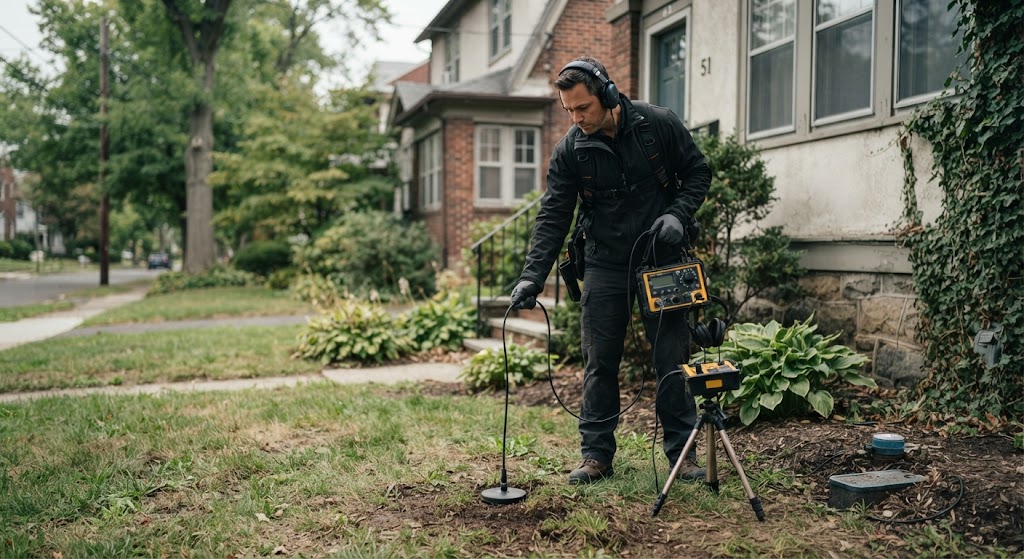
Investigating Finished Basement Leaks
Finished basements present a unique challenge. Behind the drywall lie drain pipes from upper floors, municipal water mains entering the home, and complex HVAC and water heating systems. Identifying a basement pipe leak Piscataway source without destroying the finished space is our priority.
We look for:
- Moisture Patterns: Are stains localized to the ceiling, trailing down walls, or rising from the baseboards?
- Water Stains: Discoloration on acoustic ceiling tiles or damp spots on carpet pad.
- Timing: Does the water appear only after showers are used, continuously regardless of use, or exclusively during rainstorms?
We use thermal imaging and moisture mapping—similar to our hidden water leak detection process—to trace the water backward from the visible damage to the hidden point of failure.
If the leak is determined to be a ruptured supply line, we can immediately discuss pipe leak repair options. If the problem is coming from beneath the concrete floor itself, we will transition to slab leak detection protocols.
Frequently Asked Questions
If the water meter shows movement when all fixtures are off, or if the water appears during dry weather, it is highly likely a plumbing leak. If the basement only gets wet during or immediately after heavy rain, it is likely structural groundwater intrusion.
Yes. By utilizing thermal imaging to detect temperature variations and moisture meters to read dampness levels through drywall, we can typically pinpoint the source of a pipe leak without immediate demolition.
If the source of the water is visibly obvious—such as a failing water heater tank or an active spray from an exposed pipe—you require emergency leak repair rather than specialized detection. However, if the water is appearing from beneath the heater or an adjacent wall, detection is necessary.