Pool Leak Detection in Piscataway, NJ
Unexplained water loss in your pool can cause serious structural damage and spike your water bills. We pinpoint inground pool leaks in liners, concrete, and underground plumbing accurately.
Evaporation or an Inground Pool Leak?
All pools lose water to evaporation, especially during the hot New Jersey summer. However, if you are adding more than two inches of water per week, you likely have a pool leak detection Piscataway NJ issue. Before calling, many homeowners perform a bucket test as an initial indication of a problem, comparing water loss inside a bucket to the loss in the pool itself.
If the pool is losing water faster than the bucket, an inground pool leak Piscataway failure is highly probable. The leak could be structural, or it could be a hidden pool plumbing leak Piscataway NJ issue located within the underground lines connecting the pool to the equipment pad.
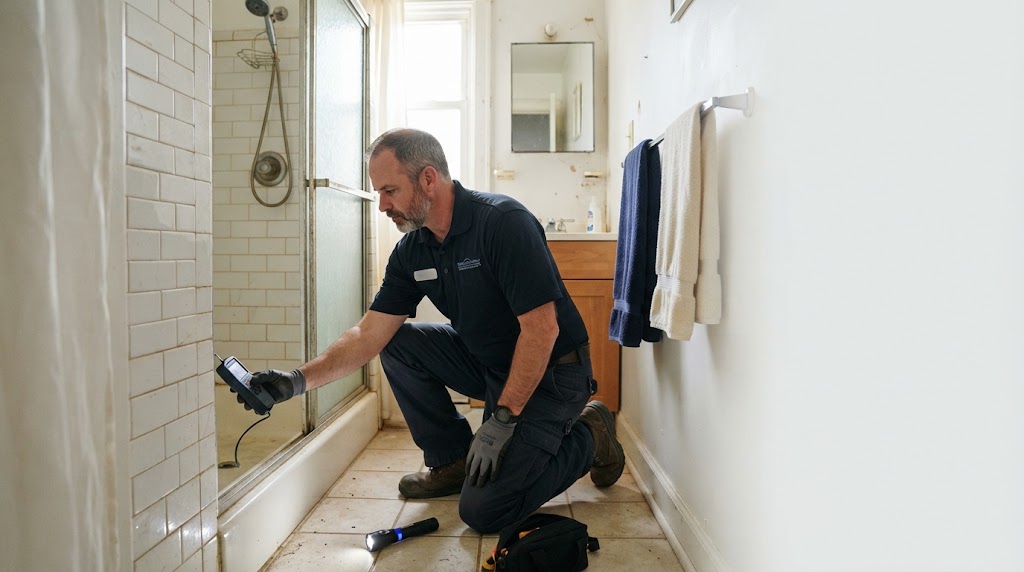
Our Pool Leak Detection Process
We use a systematic approach to isolate the source of the water loss, preventing unnecessary damage to your pool deck or landscape.
Dye Testing
We use specialized colored dyes near suspected leak areas such as skimmers, return lines, main drains, and light niches. The dye will actively pull into the leak, identifying structural failures visually.
Pressure Testing
If the structure appears sound, we pressure test the plumbing system. By sealing and pressurizing the suction lines and return lines individually, we can definitively prove if an underground pipe is broken.
Sonic Detection
If a pressurized line is leaking, we use highly sensitive sonic equipment to trace the line underground—much like water line leak detection—to find the exact break beneath the concrete deck or soil.
Winterizing or opening a pool incorrectly can often lead to cracked pipes from freezing temperatures. Finding these issues early prevents massive water loss and soil erosion beneath the pool shell. Once the source is pinpointed, swimming pool leak repair Piscataway options can be targeted directly at the failure.
Frequently Asked Questions
No. While the bucket test is a great initial indicator, it does not guarantee the presence of a leak, nor does it tell you where the leak is located. It simply helps differentiate between evaporation and systemic water loss.
Skimmers, light niches, and return line fittings are the most common points of structural failure. If the issue is plumbing, it often occurs at elbows or joints in the underground pipe running to the filter.
To perform the actual repair, yes, access to the pipe is required. However, our precise detection means we only break a small, specific section of concrete directly over the leak rather than destroying large sections of the deck guessing where the break is.