Slab Leak Detection in Piscataway, NJ
Plumbing failures beneath a concrete foundation require precision. We locate under slab leak detection Piscataway problems accurately, preventing unnecessary jackhammering and property damage.
Understanding Leaks Beneath Concrete
Many homes rely on water supply lines routed directly beneath the concrete slab foundation. Over time, these pipes—particularly older copper lines—can deteriorate. Soil movement, chemical reactions between the pipe and surrounding materials, or simple friction can cause these lines to fail. When they do, the water has nowhere to go but up into your home or out into the surrounding soil.
Because the pipes are buried in concrete, guessing the location of the leak is disastrous. Accurate slab leak detection Piscataway NJ homeowners trust relies on specialized acoustic and electronic equipment. If you notice a warm spot on floor leak Piscataway, hear running water, or find damp carpet in the middle of a room, you need professional diagnostic services immediately to minimize structural damage.
The Detection and Repair Process
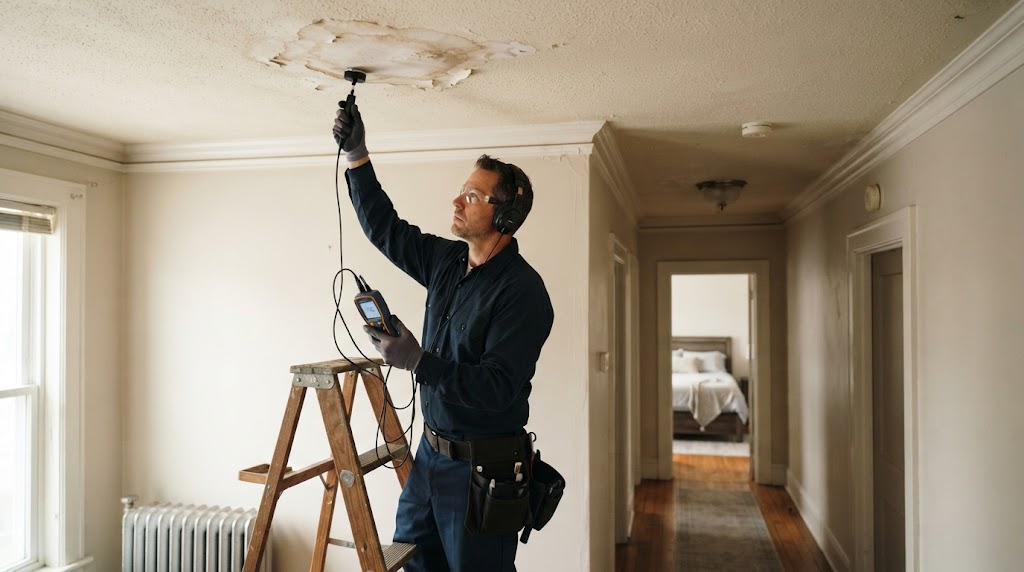
Our approach to finding leaks under concrete removes the guesswork. We start by confirming a leak actually exists by monitoring the water meter and performing a pressure test on the system. Once confirmed, we use highly sensitive acoustic ground microphones to listen for the precise frequency of water escaping under pressure through the slab.
If the leak is on a hot water line, thermal imaging provides an additional layer of verification, often highlighting a distinct heat bloom tracking the pipe's path.
Post-Detection Repair Options
Once the slab leak repair Piscataway location is pinpointed, we discuss the realities of repair. There is no single "best" repair method for every situation. Options typically include:
- Spot Repair: Breaking a small section of concrete directly over the leak to replace the failed section of pipe.
- Rerouting: Abandoning the failed line beneath the floor and routing a new water line through the walls or ceiling.
- Repiping: If the plumbing system is aged and degraded, a full repipe may be the most secure long-term solution.
We do not claim any particular repair method is always appropriate. Our job is to find the leak accurately so you have the information needed to make the right choice.
Warning Signs of a Slab Leak
Audible Signs
Hearing the distinct sound of running or hissing water when all faucets and water-using appliances are turned off.
Visible Damage
Cracked tile, damp or ruined carpet, warping hardwood floors, or water pooling unexpectedly along baseboards.
System Symptoms
A noticeable, unexplained loss in water pressure, exceptionally high water bills, or your water heater running constantly.
If the moisture appears to be coming through basement walls rather than a ground-level concrete slab, our basement leak detection services may be more applicable.
Frequently Asked Questions
We use specialized acoustic ground microphones that amplify the sound of water escaping the pipe. By tracing the plumbing layout and listening for peak decibel levels and specific frequencies, we can accurately locate the failure point without breaking concrete.
A distinctly warm area on a hard surface floor is a classic sign of a hot water line leak beneath the slab. The escaping hot water heats the surrounding concrete and flooring material.
No. While direct spot repair requires breaking the concrete, many homeowners opt to abandon the leaking underground pipe entirely and reroute a new line through the walls or attic space, bypassing the slab completely.